


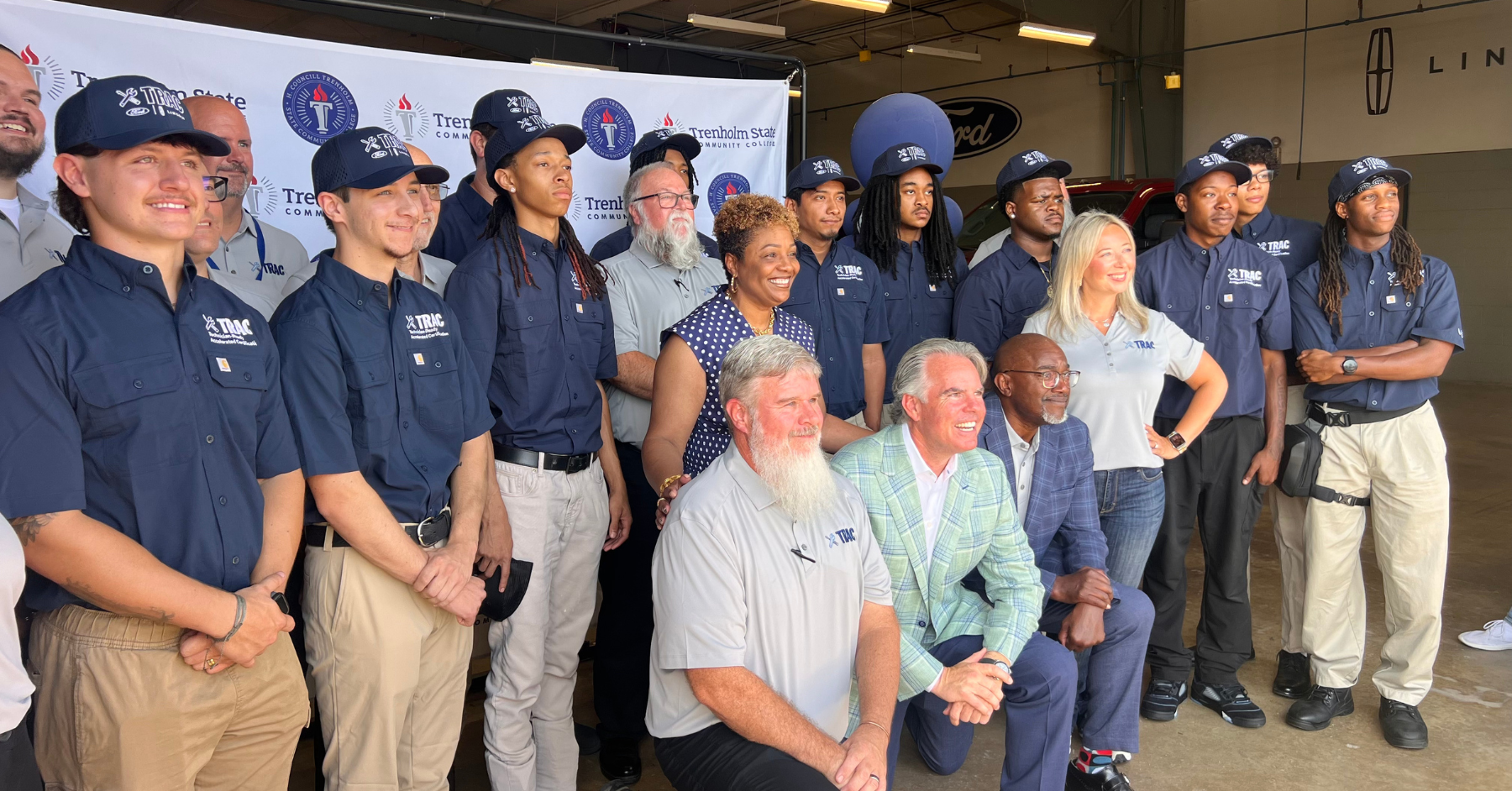
The partnership with Ford Motor Company and Stivers Ford offers a broader workforce lesson: stronger talent pipelines emerge when educators and employers share responsibility before the hiring stage.
By Christopher D. Thomas | inCity Magazine
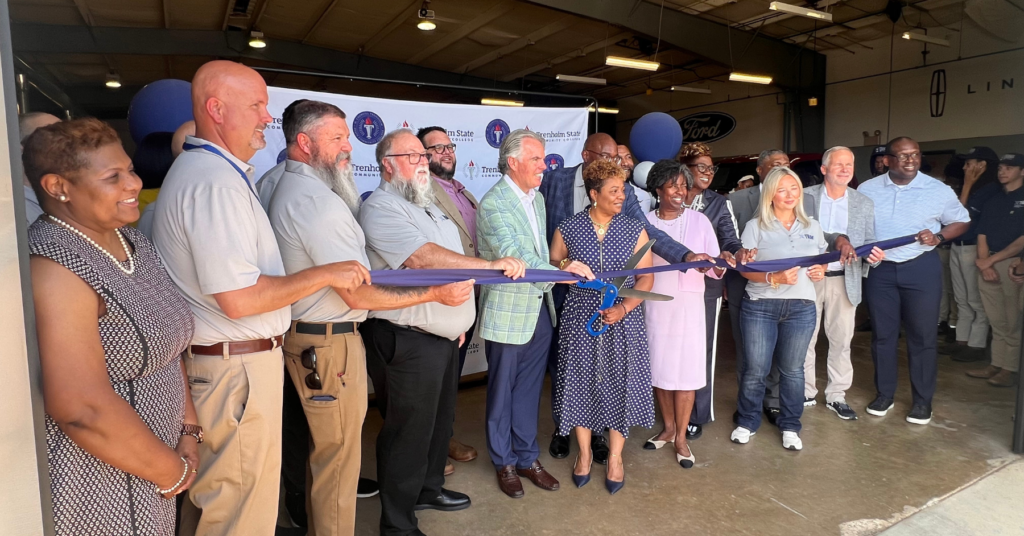
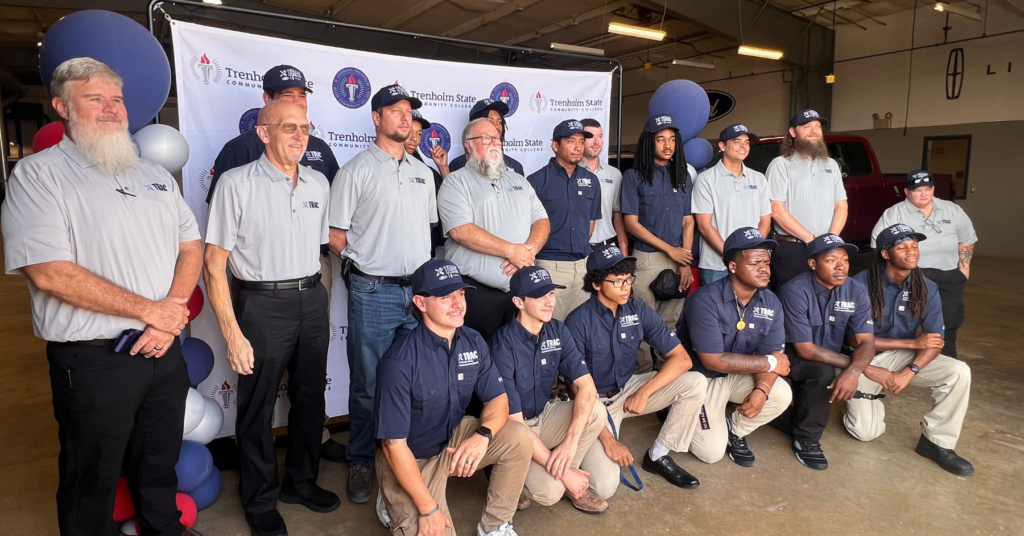
MONTGOMERY, Ala. Trenholm State Community College marked a significant expansion of its automotive workforce training Tuesday, Aug. 18, with a ribbon-cutting ceremony for the dedicated training space serving its new Ford Technician Ready Accelerated Certification program.
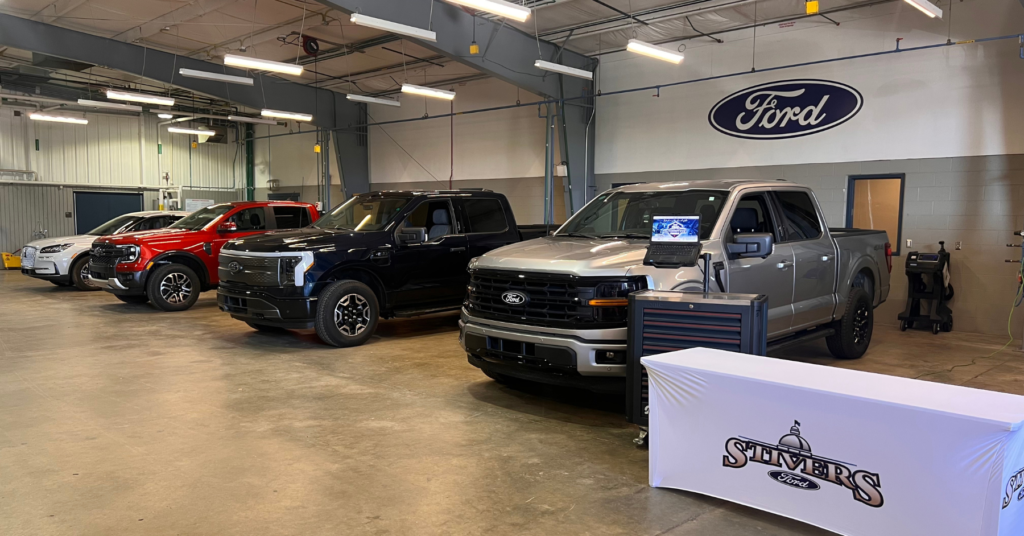
Held at Trenholm State’s Patterson Site, the ceremony brought together representatives from the college, Ford Motor Company and Stivers Ford to recognize the program’s inaugural class and formally open the facility where students will receive manufacturer-aligned instruction and hands-on automotive training.
The visible milestone was the opening of a dedicated training space. The more consequential development is the operating model behind it: an educational institution, a manufacturer and a dealership organization sharing responsibility for preparing students before they enter the workforce.
That distinction matters.
Many workforce partnerships begin after a curriculum has been developed or when employers are ready to recruit graduates. Ford TRAC brings the manufacturer and participating dealerships into the preparation process itself, connecting what students learn in the classroom with the expectations they will encounter in the workplace.
An Accelerated Pathway into Automotive Service
Ford TRAC, short for Technician Ready Accelerated Certification, is designed to prepare students to become certified Ford automotive service technicians through a condensed, two-semester pathway.
According to Trenholm State Community College, the 34-credit-hour certificate is embedded within the college’s Automotive Services program. It combines Ford-specific technical instruction, Automotive Service Excellence curriculum, classroom learning and dealership-based work experience.
Students receive training in automotive fundamentals, brakes, steering and suspension, air conditioning, and electrical and electronic systems. The curriculum also prepares participants to work with evolving vehicle technologies, including hybrid and electric systems.
The program follows an “Earn While You Learn” model that allows students to gain classroom instruction while developing practical experience inside participating dealerships.
This structure gives students exposure to the equipment, workflow, performance standards and operating environment of a dealership while they are still completing their credentials. It also gives employers an earlier role in preparing prospective technicians for the realities of automotive service.
The accelerated format creates an entry point for recent high school graduates, adult learners and people seeking a career change without requiring a traditional four-year degree.
Connecting Education with Employer Demand
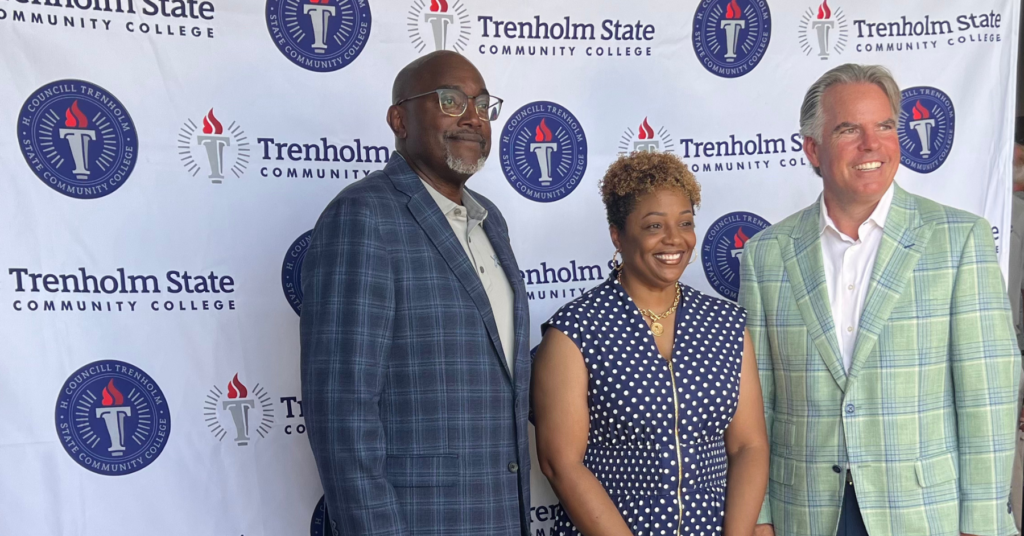
Eddie Stivers, president of Stivers Automotive Group, attended the ceremony representing Stivers Ford. His participation reflected a critical component of the model: employers engaging in talent development before students reach the hiring stage.
For dealerships, the value is not limited to attracting more applicants. Participation creates an opportunity to help students understand the technical requirements, workplace culture and performance expectations they may encounter after completing the program.
Ford Motor Company is supporting the initiative through vehicles, equipment, technical resources and manufacturer-specific training. Trenholm State provides the academic foundation, instructional environment and student support. Participating dealerships provide the workplace experience that connects technical knowledge with daily performance.
Each partner holds a different part of the solution.
That shared responsibility is especially important as automotive service becomes increasingly dependent upon advanced electrical systems, diagnostic technology, software and specialized technical knowledge. Preparing technicians for that environment requires more than classroom instruction alone. It requires coordination among the organizations educating, credentialing and eventually employing them.
More Than an Automotive Program
For Central Alabama, Ford TRAC represents more than an expansion of automotive education. It is a workforce-development model built around a defined employer need and a more direct pathway into skilled employment.
The traditional separation between education and employment can create gaps. Students may complete a program without fully understanding workplace expectations. Employers may struggle to find applicants with the right combination of technical knowledge and practical experience. Educational institutions may not receive timely feedback about how industry requirements are changing.
A partnership structured around shared preparation can reduce those gaps.
Instead of asking students to navigate the transition from education into employment independently, Ford TRAC incorporates dealership experience into the educational process. Students can begin understanding the profession while they are still building their skills, and employers can participate before graduation rather than waiting at the end of the pipeline.
That makes the program relevant beyond the automotive sector.
Community colleges, manufacturers, healthcare systems, technology companies, public agencies and other employers face similar challenges when academic preparation and operational needs develop separately. The industries may differ, but the underlying question remains the same: How can education and enterprise share responsibility for developing the workforce both will depend upon?
What Other Institutions Should Watch
The Ford TRAC model rests on three aligned decisions: curriculum connected to current industry requirements, workplace experience incorporated into the educational process, and employer participation before graduation.
The presence of all three does not guarantee success, but it creates stronger conditions for it.
Education leaders can observe whether the accelerated structure helps students move from enrollment to credential completion. Employers can assess whether early workplace exposure produces candidates who are better prepared for dealership environments. Workforce and economic-development leaders can examine whether the model creates a repeatable connection between training investments and employment outcomes.
Those lessons could become useful well beyond automotive service.
If the program produces consistent completion, credentialing, placement and career retention, it may offer other institutions and employers a practical example of how to design workforce pipelines around shared accountability rather than separate expectations.
The Next Chapter Begins
Tuesday’s ribbon cutting represented an important milestone, but the longer-term significance of Ford TRAC will be determined by what happens after students enter the classroom and the dealership.
The next chapter will be measured through student completion, credentials earned, employment placements and long-term career progression. Those outcomes will reveal whether the partnership can become a sustainable model for addressing employer needs while creating meaningful economic opportunities for students.
For Trenholm State, Ford Motor Company and Stivers Ford, the inaugural class is the first opportunity to demonstrate what can happen when education and industry do more than support the same goal. They begin designing the path toward that goal together.
Tuesday’s ceremony opened a dedicated training space. The larger opportunity is opening a more direct and accountable path between education and employment.
Additional information about the Ford TRAC curriculum, eligibility, financial assistance and application process is available through Trenholm State Community College.
About the Author: Christopher D. Thomas is Publisher of inCity Magazine and Founder and Principal of inMMGroup, a private advisory firm focused on strategy, positioning, governance and decision clarity for leaders and institutions.
Leave a Reply